Receiving the batch
We accept the cargo at the terminal and verify the initial data needed for further handling and dispatch.
Start of the through process
International transport group Transit arranges transshipment of cargo through a terminal: we accept the batch, resort it, palletize it if necessary, and send it to the destination addresses. Cross-docking is suitable for distribution when the cargo does not need to be placed in a warehouse for long.
Calculate Cost
24 hours
processing and dispatch
24/7
operation mode
5
warehouse terminals
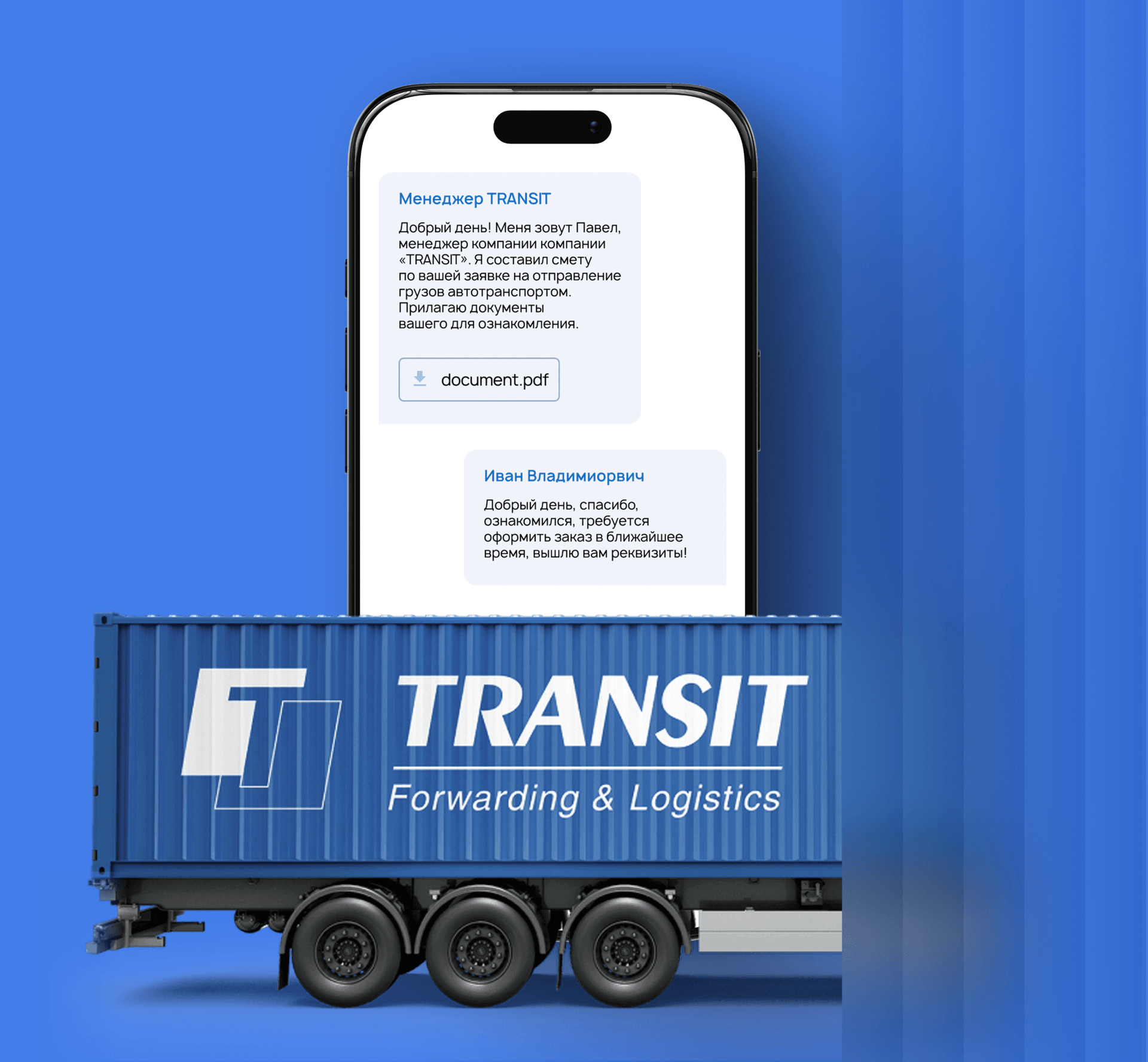
In through handling, it is important to coordinate the incoming supply, the terminal operations, and the dispatch to recipients. We build the operational sequence within one framework and control the handover of the cargo to the next stage.
The cargo is accepted at the terminal, resorted, and immediately sent on. This model is suitable for distribution where storage is not a task in itself.
The operational process is built to complete terminal handling and hand the batch over for onward dispatch within 24 hours.
Cross-docking operations are performed in a 24/7 mode. This makes it possible to plan receiving and dispatch with regard to the supply schedule and the recipients' needs.
WMS can be integrated with the client's 1C to synchronize warehouse records. The set of operations and the cargo handover procedure are agreed before handling begins.
Cross-docking is used for batches that need to be quickly distributed after receiving, resorting, and preparation for onward dispatch.
| Category | Product examples |
|---|---|
| Palletized batches | Batches that require receiving, resorting, and palletizing before dispatch |
| Goods for distribution | Supplies sent to several destination addresses without long-term storage |
| Consolidated supplies | Batches accepted at the terminal and distributed for further delivery |
| Import and domestic Russian cargo | Goods passed from one logistics stage to the next after agreed handling |
| Supplies to a distribution network | Goods requiring the formation of shipments to the recipients' addresses |
Cross-docking combines several consecutive operations. Their scope is determined by the characteristics of the batch, the packaging, the address network, and the method of onward dispatch.
We accept the cargo at the terminal and verify the initial data needed for further handling and dispatch.
Start of the through process
We distribute the cargo according to the agreed scheme for the subsequent direction to the destination addresses.
Preparation for distribution
If necessary, we palletize the cargo to prepare the batch for safe and convenient handover to the onward leg.
Operation under the agreed scheme
After processing, we hand over the formed shipments for onward transportation to the destination addresses.
Dispatch within up to 24 hours
The warehouse infrastructure of International transport group Transit makes it possible to choose a terminal with regard to the incoming route and the subsequent distribution of the batch.

The company's warehouse network includes the Moscow North terminal with an area of 9 000 m² and the Moscow South terminal with an area of 12 000 m².
The terminal supports receiving, issuing, packaging, loading and unloading operations, container stuffing and stripping, sorting, and assembly.
Vladivostok and Novosibirsk are part of the company's terminal network. The specific site and the sequence of operations are determined by the cargo's route and distribution model.
Cross-docking is used in models where the main task is to quickly redistribute an incoming batch rather than place it in long-term storage.

The supply is accepted at the terminal, resorted according to the agreed address scheme, and passed on for onward dispatch to recipients.
The incoming batch goes through the agreed terminal operations and is sent to the next stage of transportation without long-term warehouse placement.
If necessary, the cargo is palletized after receiving and resorting, then formed for dispatch to the destination addresses.
We clarify the assortment, volume, packaging, arrival schedule, address scheme, and the cargo's onward route.
We agree on the procedure for receiving, resorting, palletizing, and dispatching to the destination addresses.
We accept the cargo and start the agreed through-handling process.
We distribute the batch and, if necessary, palletize the cargo for onward dispatch.
We prepare the cargo for handover to onward transportation according to the agreed distribution scheme.
We hand over the formed shipments to the destination addresses within 24 hours of processing.
We provide information on the progress of the operation and the necessary closing documents within the agreed framework.
Cross-docking is the transshipment of cargo through a terminal without long-term storage. The cargo is accepted, resorted, palletized if necessary, and sent to the destination addresses.