Sea container shipping

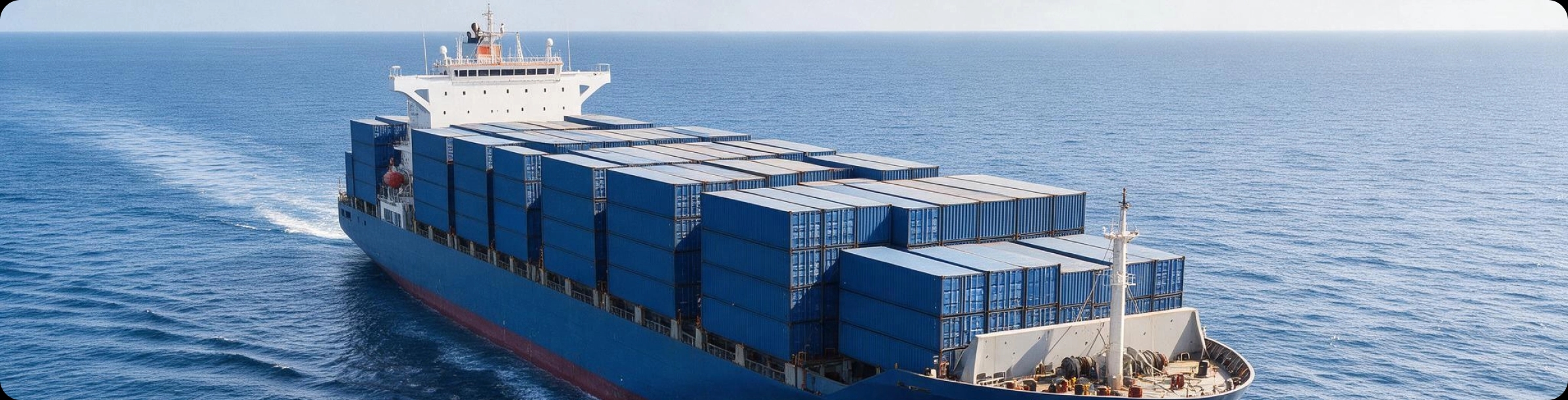
International transport group Transit organizes sea container shipping via the ports of Vladivostok, St. Petersburg and Novorossiysk — and is not limited to these destinations. Our own Transit Line and 60+ ports worldwide. FCL — full container, LCL — consolidated cargo and refrigerated transportation. Delivery in a single loop: from the port of origin to the consignee's warehouse.

Calculate Cost
Sea container shipping

60+

ports worldwide in our shipping geography

7

Transit Line vessels in ownership

Calculate Cost

Why customers choose Transit sea shipping

Sea transportation is the most cost-effective way to deliver large shipments over long distances. Our own Transit Line fleet, containers and other assets make it possible to arrange transportation as a turnkey solution within a single logistics window — with one responsible partner and container control along the entire route.

  1. Our own Transit Line

    The Transit Line fleet lets us manage the sea leg within a single logistics window — without sourcing capacity through intermediaries. We don't look for capacity: we manage it and control the container along the entire route.

  2. Control in Asia before shipment from the factory

    We consolidate shipments from different factories into a full container (FCL) at warehouses in China.

  3. Digital control

    A single window for managing shipments: proactive notifications about key events, statuses, documents and invoices available in your personal account. Closing documents are stored in one place; reports on timelines, costs and volumes help make management decisions.

  4. A personal approach at any scale

    From one container a month: access to Transit's assets and operating expertise. When planning, we account for seasonality, packaging specifics and cargo storage requirements — from small batches to industrial equipment, for retail and e-commerce.

What cargo we carry

Sea containers carry virtually any product. Below are the main cargo categories for which we have configured logistics solutions.

Cargo categories and examples
CategoryProduct examples
Electronics and appliancesSmartphones, laptops, home appliances, components, server equipment
Apparel and textilesReady-made clothing, fabrics, trims, footwear, accessories
Machinery and machine toolsIndustrial equipment, machine tools, spare parts, steel structures
Furniture and interiorCase goods, upholstered furniture, decor, bathroom fixtures
Food productsCoffee, tea, spices, canned food, packaged dry goods
Auto partsTires, wheels, body parts, engines, consumables
Household goodsTableware, household chemicals, garden products, household supplies
Agricultural productsGrain, oilseeds, pulses — export via Vladivostok

Types of transportation

Sea transportation is more than just “the sea.” It is comprehensive delivery where the sea leg is combined with ground transport. The choice of port and further delivery method depends on the cargo's origin and final destination.

Via the western ports of Russia
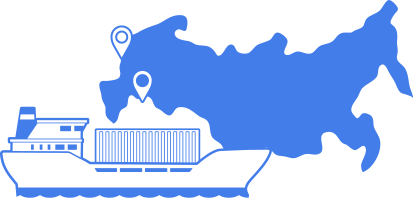
St. Petersburg, Novorossiysk, Baltic Sea ports. For cargo from Europe, Turkey, India and the Mediterranean countries. Further delivery across Russia — by rail or road.

St. Petersburg, Novorossiysk, the Baltics · from Europe, Turkey, India
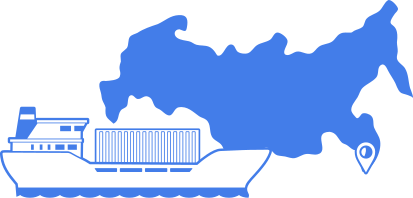
Via Vladivostok

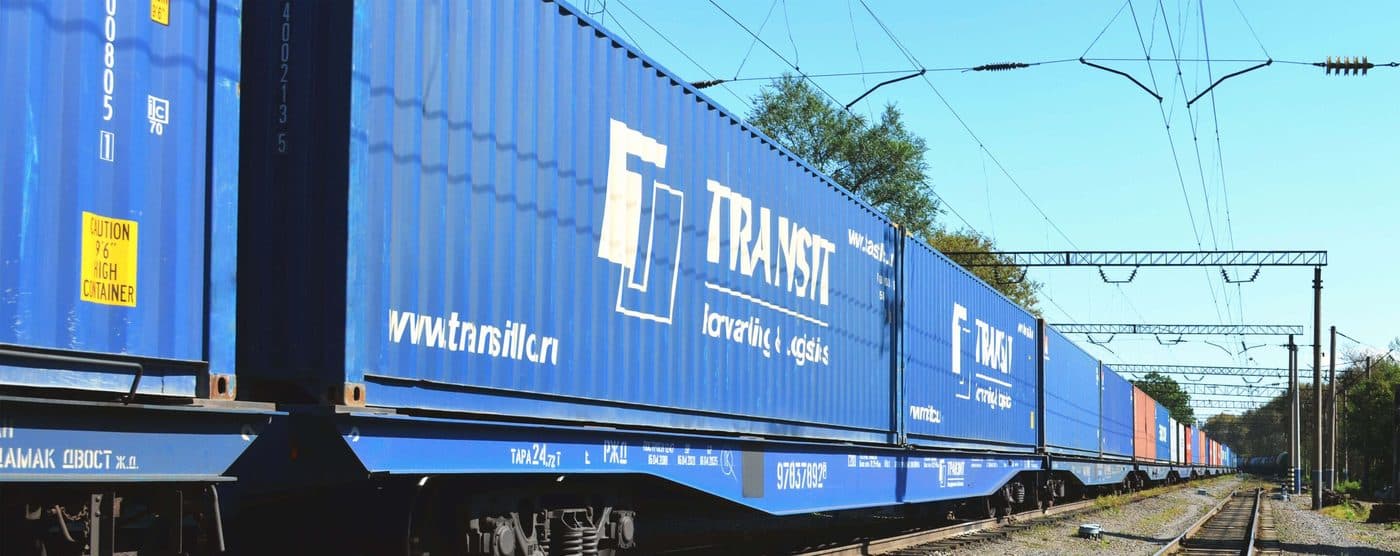
Far East ports — the gateway for cargo from China, South Korea, Japan and Southeast Asia. The shortest sea route from Asia to Russia. Further delivery — by road or direct rail routes. Our own trains depart on a stable schedule every two days, so the arrival date can be planned in advance, even before loading in China. The Ussuriysk terminal ensures prompt handling: from the vessel's side — straight onto our own rail flatcars.

Vladivostok · from China, South Korea, Japan, Southeast Asia

Shipping geography

The geography of sea transportation covers the key trade routes. Every route is served by our own Transit Line and operating infrastructure.

China — Vladivostok

The main import route from China. Sea lines from the ports of Shanghai, Ningbo, Qingdao, Xingang, Nansha, Xiamen, Shantou and Yantian to Vladivostok. Transit time — 7–12 days. Offices in Shanghai and Chengdu — local specialists arrange the first mile. Further delivery across Russia — by rail or road.

Europe — St. Petersburg

Sea lines from ports in Germany, the Netherlands, Belgium and Finland to the Greater Port of St. Petersburg. For cargo from Europe, Turkey and India. Further delivery across Russia — by rail or road.

Southeast Asia — Vladivostok

Sea lines from Vietnam, Thailand, Indonesia and Malaysia via Vladivostok. Offices in Vietnam and Thailand — the first mile in the country of origin. For cargo from Southeast Asia — the optimal route with minimum transit time.

Company scale and capacity

International transport group Transit is one of the largest sea container shipping operators in Russia. These are the numbers that define our capabilities in the sea segment.

60+

ports worldwide in our geography

7

Transit Line vessels in ownership

36 000+

own containers

7–12

days in transit from China to Vladivostok

13

offices in 7 countries

2007

year founded

Cases we solve

Sea transportation solves different business challenges. Below are typical scenarios for which we have already configured logistics solutions.

Importing spare parts for heavy machinery from China via Vladivostok

An entrepreneur sells spare parts for heavy machinery. Shipments usually come from 2–3 suppliers, but the total volume does not exceed 25–27 m³. We consolidate his deliveries at a warehouse in the port of origin. We stuff the container and ship it to Vladivostok with further delivery to the Moscow Region. The customer receives cargo from different shippers all at once.

Tank container transportation

The customer is a Russian plant. They purchase raw materials for production, transported in tank containers. We supply the equipment to the supplier and deliver the loaded equipment to the port of origin. We load it onto a vessel and ship it to Vladivostok. Further delivery by rail to the consignee's siding.

Stages of arranging transportation

  1. Request and quotation

    You submit a request with your cargo parameters. The manager clarifies the details: route, timelines, container type, special requirements. We hold an initial consultation on the optimal shipping method.

  2. Quotation and contract

    We prepare a commercial offer with a breakdown of all costs: station-to-station, first mile, local charges, customs payments. We sign a contract fixing timelines and costs.

  3. First mile and loading. Space booking

    We book space on a sailing. We arrange pickup from the shipper's warehouse. Delivery to the port of origin. Loading the container onto the vessel.

  4. Sea transportation

    The container travels by sea. You get online access to statuses: the vessel's current position, ETA, loading and unloading status in ports.

  5. Unloading at the destination port

    The container is unloaded at the port of Vladivostok, St. Petersburg or Novorossiysk. We arrange terminal acceptance. If necessary — LCL deconsolidation.

  6. Customs clearance

    Our customs brokers prepare the declaration, calculate duties and VAT, and support the release of the goods.

  7. Delivery to the consignee's warehouse

    We arrange the last mile — delivery of the container to the consignee's warehouse by rail or road. We hand over a complete set of closing documents.

Comprehensive logistics support

Sea transportation is more than just the ocean leg. We take on all stages: from the first mile in the country of origin to the last mile at the consignee's warehouse.

Customs clearance

Full cycle: HS classification, customs value calculation, preparation of declarations, release support. We handle import duties, VAT, excise taxes and currency control.

Cargo insurance

Insurance of the container and cargo at full value on all legs of the route — the sea leg, rail and road. The policy covers damage, loss and delay risks.

Warehouse handling and delivery

Acceptance, LCL deconsolidation, cross-docking at own warehouses. Further delivery by rail or road. Marketplace services: arrival notices, time slots, delivery to fulfillment centers.

Comparing sea routes

MethodTimeCostWhen to choose
Via Vladivostok7–12 days to the port + rail/truck across RussiaMediumCargo from China, South Korea, Japan, Southeast Asia — eastern and central Russia
Via St. Petersburg40–55 days to the port + rail/truck across RussiaLowerCargo from Europe, Turkey, India — western and central Russia
Via Novorossiysk30–45 days to the port + rail/truck across RussiaLowerCargo from Turkey, the Mediterranean, India — southern Russia

Via Vladivostok

Time
7–12 days to the port + rail/truck across Russia
Cost
Medium
When to choose
Cargo from China, South Korea, Japan, Southeast Asia — eastern and central Russia

Via St. Petersburg

Time
40–55 days to the port + rail/truck across Russia
Cost
Lower
When to choose
Cargo from Europe, Turkey, India — western and central Russia

Via Novorossiysk

Time
30–45 days to the port + rail/truck across Russia
Cost
Lower
When to choose
Cargo from Turkey, the Mediterranean, India — southern Russia

We will prepare a comparative calculation for your cargo — with specific timelines, budgets and risks for each port.

Frequently asked questions

The cost depends on the route, container type (20', 40', 40'HC, 45'), cargo weight and volume, as well as additional services. We provide a detailed calculation with a breakdown: the sea leg, port charges, delivery across Russia, customs payments. A transparent rate structure with no hidden charges is our key principle.

Work with us

Submit a request and our specialists will contact you. We will calculate the cost and select the optimal route and delivery time. The consultation is free.

Submit a request