Tank containers
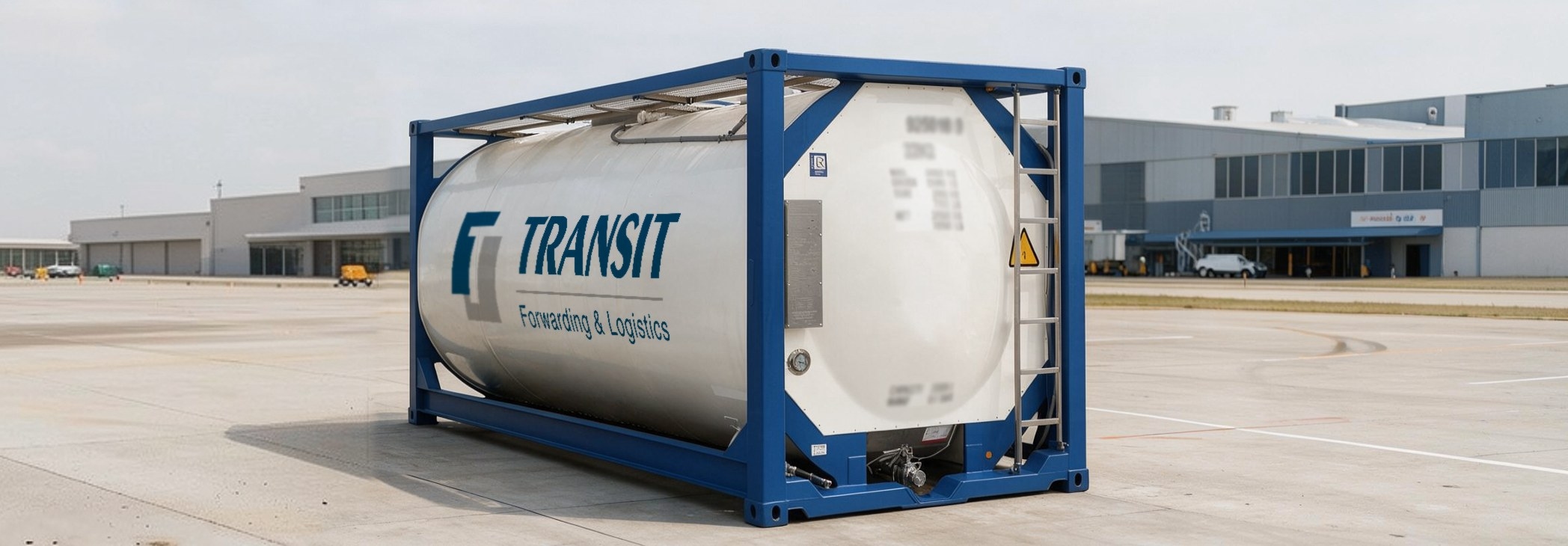
T-11 and T-14 units with a capacity of 24,000–26,000 liters, with washing, steaming, and product preparation available.
24,000–26,000 L
International transport group Transit arranges liquid cargo transportation in tank containers and flexitanks. The choice of technology depends on the product, the shipment volume, the tank preparation requirements, and the delivery route.
Calculate Cost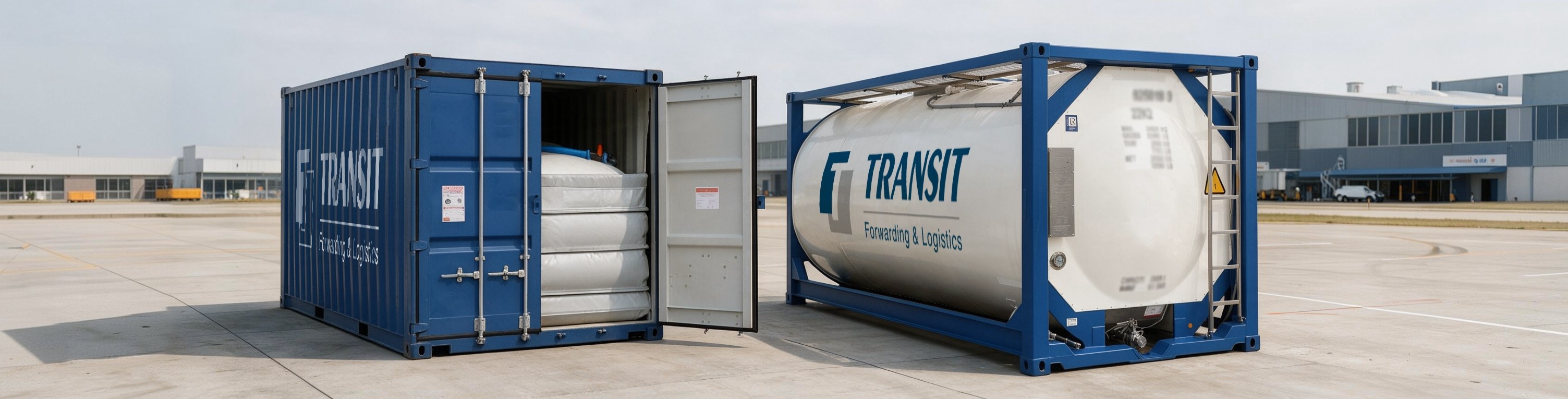
Tank containers and flexitanks serve different operational tasks. Before quoting, we compare the product's properties, the transportation conditions, the need for tank preparation, and the delivery chain.
We determine whether a T-11/T-14 tank container or a standard 20-foot container with a flexitank is right for the job.
For tank containers, washing, steaming, and preparation for a specific product — chemicals, food products, or oils — are available.
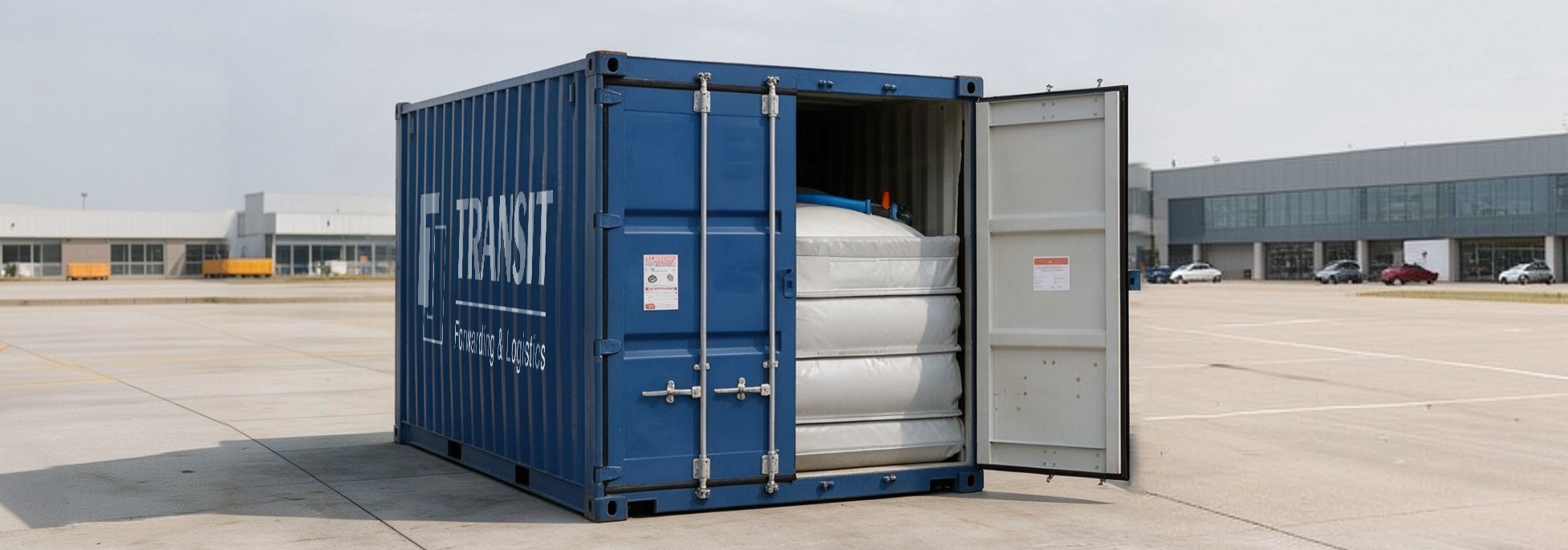
The flexitank is installed inside a standard 20-foot container and eliminates the need for a specialized tanker.
We arrange transportation, terminal operations, customs clearance, and delivery within a single operational loop.
Feasibility of transportation is confirmed based on the product's characteristics, packaging requirements, and the route.
| Category | Product examples |
|---|---|
| Vegetable oils | Transportation in tank containers or flexitanks using the agreed process |
| Food-grade liquids | Wines, juices, milk, and other products — after verifying the transportation conditions |
| Chemical products | Liquid chemical cargoes with the selection of a suitable tank and preparation requirements |
| Export agricultural cargo | Liquid bulk shipments within export and multimodal deliveries |
The choice of method depends on the product's properties and the operations required before and after transportation.
T-11 and T-14 units with a capacity of 24,000–26,000 liters, with washing, steaming, and product preparation available.
24,000–26,000 L
The liquid cargo is placed in a single-use flexitank inside a standard 20-foot container.
Standard 20-foot container
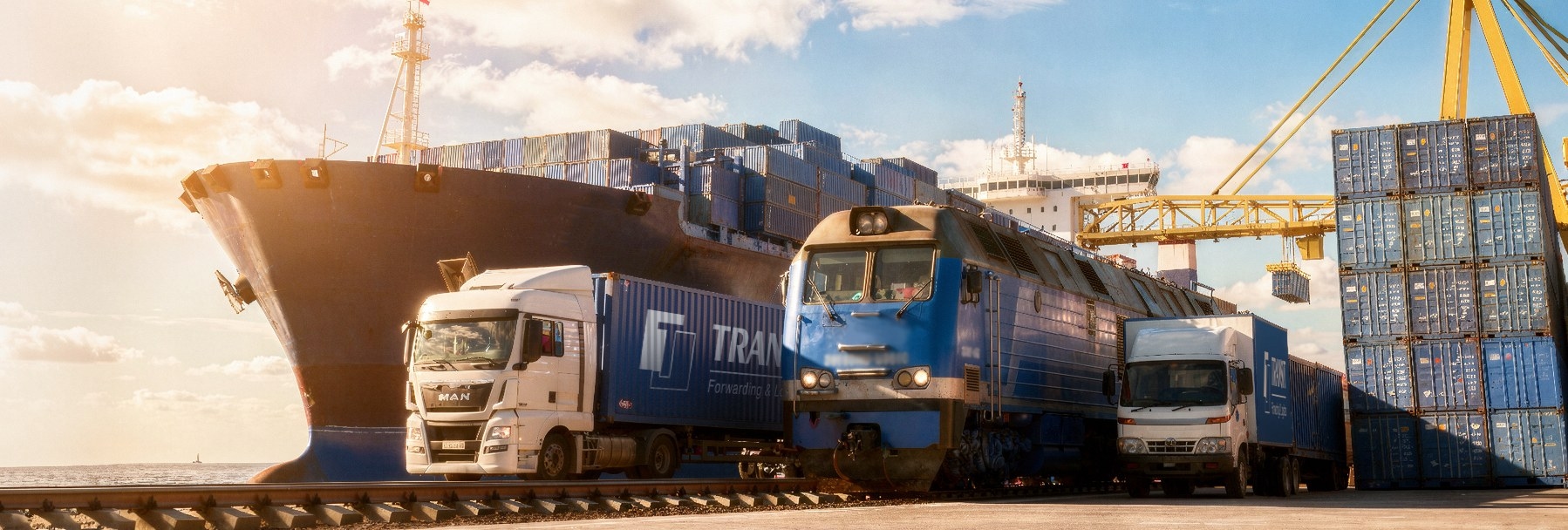
A liquid bulk shipment can be integrated into a sea, rail, road, and warehouse logistics chain.
Sea · rail · road
We build import, export, and domestic Russian schemes with the liquid cargo's characteristics and the availability of terminal infrastructure in mind.

Arranging the export of vegetable oils and other liquid cargoes via suitable sea, rail, and multimodal routes.
Delivery of liquid cargoes from the supplier, with sea, rail, and road legs added as needed.
Transportation between terminals, warehouses, and consignee facilities as part of an agreed logistics chain.
We work with two technology scenarios for liquid cargo and arrange the necessary tank preparation within the agreed scheme.
T-11/T-14
tank container types
24–26 thousand L
tank container capacity
20 feet
container for a flexitank
Additional operations to prepare a tank container for a specific product.
Tank preparation tailored to the requirements for chemicals, food products, or oils.
Liquid cargo transportation can be built into a container and multimodal route.
We coordinate the agreed stages: preparation, dispatch, terminal operations, and delivery.
The choice of solution is based on the product's properties and the operational scheme of the specific shipment.

We compare the product's requirements, volume, and route, then select a tank container or a flexitank.

We arrange the preparation of a suitable tank and agree on the sequence of transport and terminal operations.

We verify the product's characteristics and tank requirements, then build the applicable transportation scheme.
We clarify the cargo's physical properties, volume, packaging, and transportation requirements.
We determine whether to use a tank container or a flexitank.
Where necessary, we arrange washing, steaming, and preparation for the product.
We agree on the transport legs, terminal operations, and documents.
We coordinate dispatch, progress along the route, and handover to the next stage.
We arrange delivery to the agreed destination point and the closing operations.
For a liquid cargo shipment, we add the logistics services needed, depending on the geography and the product.
Arranging the container sea leg and terminal operations.
Onward dispatch in a container setup across Russia and international routes.
Foreign trade shipment procedures supported in tandem with logistics.
Arranging the agreed operations at the warehouse or terminal according to the shipment's parameters.
A tank container is a specialized T-11 or T-14 unit with a capacity of 24,000–26,000 liters. A flexitank is installed inside a standard 20-foot container and is used as a single-use container.